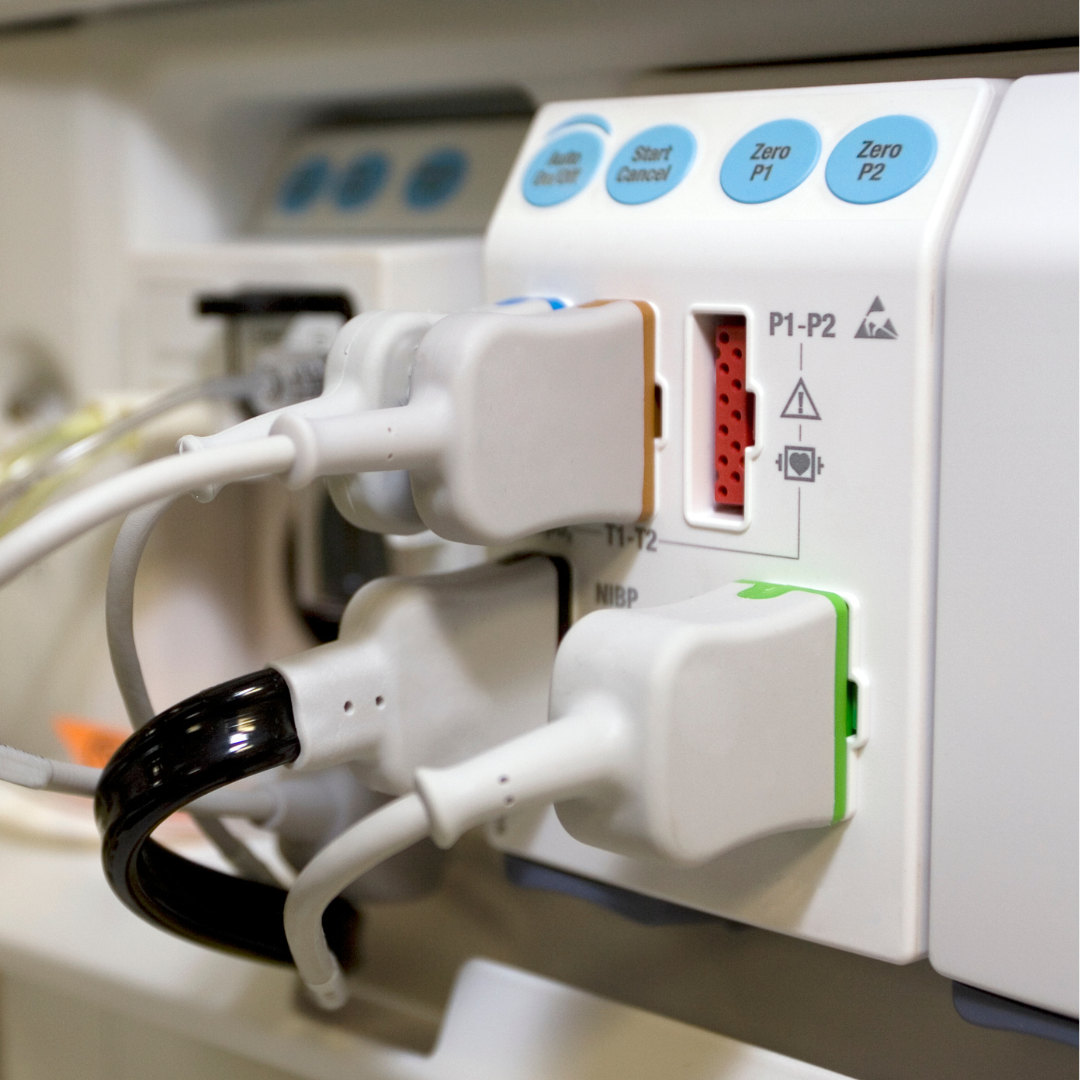
Medical assemblies can be expensive to develop, due to many factors. These include the potential for unexpected revisions after FDA rule changes or prototype disapproval, strong durability needs for cables used in proximity to radioactive or electromagnetic currents, and low voltage limits that require careful development.
This means that keeping costs down and striving for FDA compliance is paramount, since the final version of any new cable assembly or build of an OEM by a different manufacturer will always be under tight scrutiny. This post will highlight some of the best ways we’ve found to keep costs on cables for the healthcare industry down.
What This Will Not Cover
Before we get into the specifics, here are a couple of caveats on the scope of this educational post:
- Healthcare related cable assemblies and wire harnesses cover a wide gamut of needs and applications, and therefore the methods of keeping production costs down vary a lot depending on the assembly type. These are general principles that apply to most cable assemblies, but may not to all.
- We also do not provide cables that touch patients’ skin such as ECG cables, so we will not be going over anything related to that technology. You can refer to the Cardinal Health study on single-patient use ECG cable to get more insight on that topic.
1. Use Readily Available Wires, Materials and Components for Lean Manufacturing
Specialty items can offer incredible performance benefits or make installation easier: for example, a new type of specialized cable jacket may be extremely durable compared to more readily available options, and therefore make the finished cable assembly have a much longer usage life. However, we always have to determine if the benefit of the specialized component is worth the additional cost, or if it will increase lead times due to difficulty obtaining the needed materials.
Lean manufacturing is all about finding opportunities for cost savings that will not adversely affect the final product. In many cases, a specialized component will offer a benefit that is not absolutely necessary, making the potential upside less worthwhile while still increasing costs and turnaround times. We recommend only choosing unusual or completely new components when it has been deemed as a requirement, for accomplishing what the cable assembly will be built to do.
2. Utilize Nearshore Manufacturing or Part Sourcing Where Possible
It is not always possible to get parts made in the United States and it can be expensive as well, but an alternative exists that does not require overseas shipping or logistics: nearshore manufacturing. Technical Cable Applications partners with two excellent facilities in Guadalajara that help us reduce lead times, offer lower MOQs for custom requests, and save on costs overall thanks to avoiding overseas shipments and delays.
We recommend working with cable manufacturers who provide nearshore manufacturing options, or are partnered with reputable nearshore manufacturing companies, as the cost benefits of these partnerships should be carried on to you and keep you from nightmare scenarios where overseas parts are delayed well past the deadline, or put on hold entirely due to global events. You may also find a quality boost over using overseas components, in some cases!
3. Choose House Tooled Connectors from Major Medical Cable Assembly Manufacturers over Building Custom Tools
While we and other custom cable manufacturers can provide custom tooling and dies when absolutely necessary, these processes add a significant amount of time to pre-production and prototyping processes, and therefore must be chosen only when it is necessary to do so. A cheaper method is to choose to source connectors from one major cable manufacturer in the healthcare space like TE, GE or Phillips that will all work together and not need customization, since those companies have in house tooling that is ready to go.
This will avoid needing to pay extra for custom tooling, and make the assembly easy to manufacture at scale. The downside is having to work with the limitations of existing connectors to accomplish the assembly’s needs, but with creative engineering and cable drawing it may help with cost reduction.
4. Use the Fewest Number of Connectors for Additional Cost Savings
Finally, it’s best to simplify the cable assembly’s drawing as much as possible with the fewest connector points and components possible. Unless a connector or PCB (printed circuit board) is absolutely necessary for the necessary functions of the assembly in all instances, it may be better to remove it and find a way to accomplish the same need via other components retained in the drawing.
This is a difficult process and may not be possible if the assembly is already using the minimum number of components, but can result in significant cost savings for the final production order of thousands of assemblies.
